
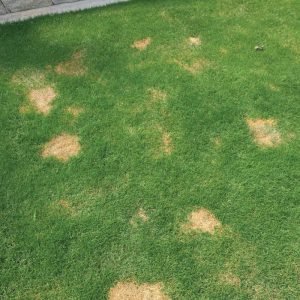
Why Dog Urine Burns Your Grass (and What You Can Do About It)
One of the questions we get quite frequently this time of year at Happy Dog is about dog urine burning the grass. You are not alone if your lawn is dotted with yellow or brown patches where your dog likes to potty. As dog owners, a perfect yard might be hard to maintain but if you are concerned about the spots, keep reading. Contrary to popular belief, it’s not the acidity of your dog’s urine that’s the problem.
The Real Cause: Nitrogen
Dog urine contains a high concentration of nitrogen, a natural byproduct of protein metabolism. While nitrogen is good for grass in small amounts (it’s what’s in fertilizer!), too much nitrogen in one spot “over-fertilizes” the grass, causing it to burn and die.
This is especially noticeable if your dog pees in the same grassy spot repeatedly.
❗ What About Acidity?
It’s a common thought that the acidity of urine causes the problem—but research shows that pH (acidity/alkalinity) isn’t the culprit. It’s the nitrogen concentration that leads to those unsightly spots.
If you’re concerned about your dog’s urine color, odor, or if lawn burns seem excessive, speak with your veterinarian to rule out any underlying health issues.
Better Ways to Protect Your Lawn
Here are vet-friendly, effective strategies to reduce damage:
✅ 1. Train your dog to potty in one designated area, preferably a non-grassy area.
Limit the affected area and protect the rest of your lawn.
How to do this? Read our post about Potty On Cue! from Enjoy Your Dog Training.
✅ 2. Dilute urine spots with water immediately
Keep a watering can or hose nearby.
✅ 3. Plant burn-resistant grasses
Some grasses tolerate nitrogen better than others:
- Perennial ryegrass
- Fescues (especially tall fescue)
- Kentucky bluegrass is more sensitive, so consider overseeding with ryegrass or fescue in high-traffic areas.
You also want to make sure your dog is properly hydrated, as concentrated urine can contribute to more severe lawn burn.
Bottom Line:
Lawn burns are a normal side effect of dog ownership—but they can be managed. Training, watering, and thoughtful lawn care go a long way. And remember: if your dog’s urine seems unusually strong-smelling or discolored, always consult your veterinarian.